
Articles
Hydrogen Economist looks at the new hydrogen projects added to our database and the progress made on existing developments
Twenty-eight new projects were added to our database in the last two weeks, primarily across green and blue hydrogen.
Of the new projects, 15 are in Europe (Austria, Belgium, Denmark, Germany, Norway, Romania, Russia, Spain, Sweden and the UK), seven are in North America (Canada and the US), five in Asia-Pacific (Australia, Japan and South Korea) and one in the Middle East (Oman).
In Denmark, energy system operator Energinet and European energy infrastructure company Gasunie released a technical study that outlined Denmark’s capacity to supply 10-15pc of Germany’s future hydrogen demand. According to the study, a new dedicated hydrogen pipeline between Denmark and Germany could export up to 15TWh of green hydrogen produced from Danish offshore wind by 2030. The pipeline would run from either Esbjerg or Holstebro for 350-400km to Hamburg. Around 50-60pc of the pipeline could be repurposed from existing natural gas networks, helping to limit costs. Demand for hydrogen in Denmark is relatively limited, with supply expected to exceed demand.
In the US, utility-scale solar plant developer First Solar and Denmark’s Nel Hydrogen Electrolyser have announced plans to collaborate on the development of integrated solar photovoltaic (PV)/hydrogen power plants. The companies aim to develop an integrated power plant control and supervisory control and data acquisition (Scada) system, leading to the optimisation of PV-electrolyser hybrid projects and, ultimately, lower-cost hydrogen and electricity. The companies will then look at ways to integrate technology elements throughout the solar and hydrogen production plant.
In Russia, chemical company Shchekinoazot and Haldor Topsoe—a supplier of catalysts, technology and services to the chemical industry—have signed a memorandum of understanding to develop blue and green methanol, ammonia and hydrogen production, while reducing CO2 emissions at the Russian firm’s existing and future plants in the Tula region, south of Moscow. Shchekinoazot will use Haldor Topsoe’s experience and technologies in reforming, electrolysis, carbon capture and utilisation, and ammonia and methanol synthesis to efficiently and safely produce high-quality chemicals with low rates of greenhouse gas emissions.
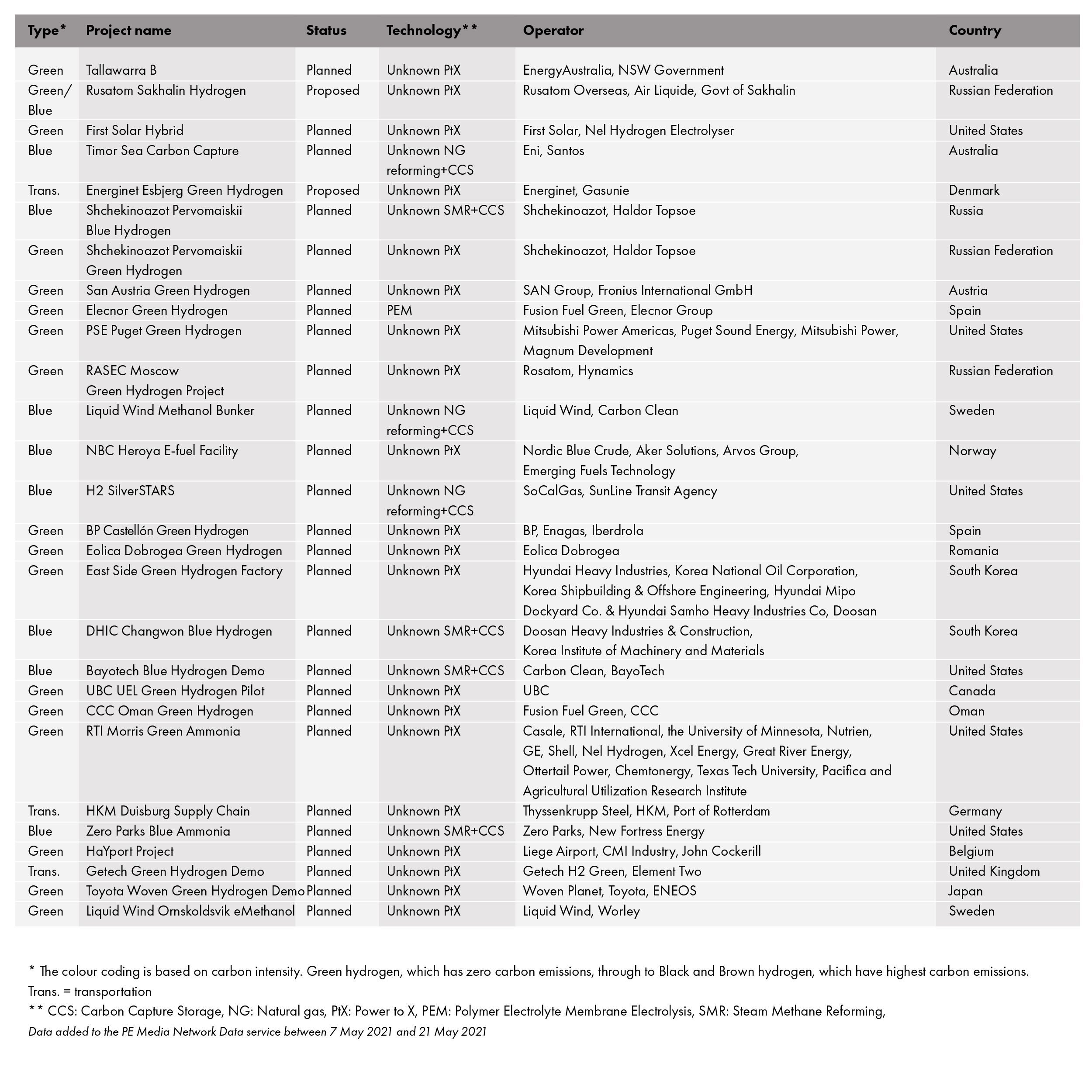
Comprehensive details can be found on the Hydrogen Data Service.

Related Articles
Connect with H2Tech
