
Articles
Hydrogen Economist looks at the new hydrogen projects added to our database and the progress made on existing developments (3)
Eighteen new projects were added to our database in the last two weeks and updates provided for 11 existing developments, primarily across green hydrogen, but also blue and grey.
Of the new projects, ten are in Europe (Austria, Finland, France, Germany, Spain & Switzerland), six are in North America (Canada & the US), one in Asia-Pacific (Japan) and one in South & Central America (Chile).
In Germany, gas network operators Gascade and Gasunie have signed a declaration of intent with RWE and Shell regarding collaboration on the AquaDuctus project. The AquaDuctus pipeline will transport green hydrogen from the North Sea directly to the continent as part of the AquaVentus initiative. This will entail the installation of 10GW of electrolyser capacity for green hydrogen production from offshore wind power between Heligoland and Dogger Bank. AquaDuctus will be Germany’s first offshore hydrogen pipeline and will be capable of transporting up to 1mn t/yr of green hydrogen from 2035. The pipeline will replace five HVDC transmission systems that would otherwise have been required and provide a more cost-effective option for transporting large volumes of energy over a distance of more than 400km. The first stage of the proposed project is a detailed feasibility study.
In the US, technology firm Newpoint Gas and carbon sequestration specialist Brooks Energy have announced a technology collaboration, Escalante H2 Power, that converts retired coal-fired power plants (CFPPs) to use blue/green hydrogen as fuel. The recently retired 253MW Escalante Generating Station in Prewitt, New Mexico will be the world’s first large-scale CFPP to be converted to a large-scale, zero-emission power plant fired by blue/green hydrogen. New Gas’ process incorporates a steam methane reformer with hydrogen purification to separate the hydrogen and carbon dioxide pre-combustion. The carbon is sequestered underground, and the hydrogen is used as fuel to produce steam and generate power.
In Spain, utility Iberdrola plans to build a hydrogen refilling station for heavy vehicles in the Zona Franca Industrial Area in the Port of Barcelona. The project is currently in the design and purchasing stage but is expected to ultimately produce, store and supply 1,200kg of hydrogen per day, specifically for Barcelona Metropolitan Transport’s fleet of buses, beginning late 2021. It will be the first public facility of its type in Spain, fostering the creation of a green hydrogen hub in one of the country’s leading industrial areas.
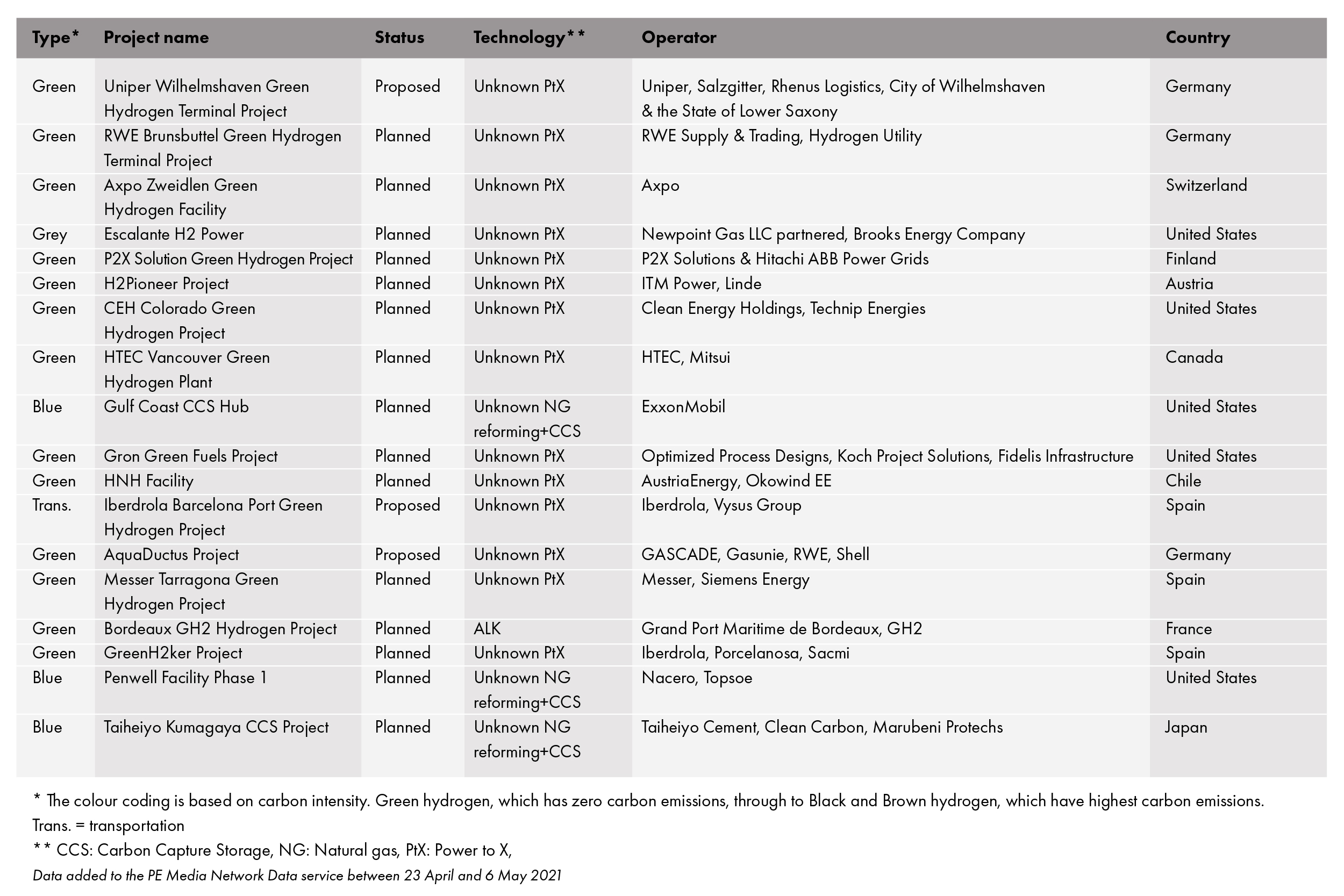
Comprehensive details can be found on the Hydrogen Data Service.

Related Articles
Connect with H2Tech
